
When Pixel Control Makes Sense — and When Standard RF Control Is the Smarter Choice
Avoid unnecessary costs: How to choose between RF and Pixel control for large-scale LED wristbands.
For many event buyers, pixel control sounds like the ultimate upgrade. It looks stronger in a proposal, promises more detailed audience visuals, and can feel like the default choice for a top-tier stadium show.
But this is exactly where many projects start getting heavier than they need to be.
Pixel control is not inherently better. It is simply a heavier execution path. It usually demands more front-end planning, clearer seat logic, earlier visual confirmation, and tighter coordination before the show even reaches on-site setup. If the event truly depends on that level of detail, the investment can be justified. If not, it often adds cost and operational pressure without adding real value on show day.
The real question is not which control method sounds more advanced. It is this: Does the show actually need seat-level visual detail, or does it need strong, reliable audience impact at scale?
The Hardware Reality Behind True Pixel Point Control
For true pixel point-control projects, the difference is not just software. It also affects the hardware path and the data workflow behind the show.
In these projects, each wristband requires a built-in smart IC chip so it can receive individually mapped control logic. That pushes the project into a much heavier hardware and DMX control workflow than standard RF zone control. This usually means:
Higher unit cost, because the hardware path is more complex.
Heavier programming workflow, because the show needs more detailed mapping, effect logic, and DMX data management.
Stricter deployment requirements, because the wristbands usually cannot be handed out randomly if the audience visuals depend on seat-based placement.
If Section A wristbands end up in Section D, the mapped effect no longer matches the plan. That is why pixel control should be chosen because the show really needs it, not because it looks stronger in a pitch deck.
When Pixel Control Makes Sense
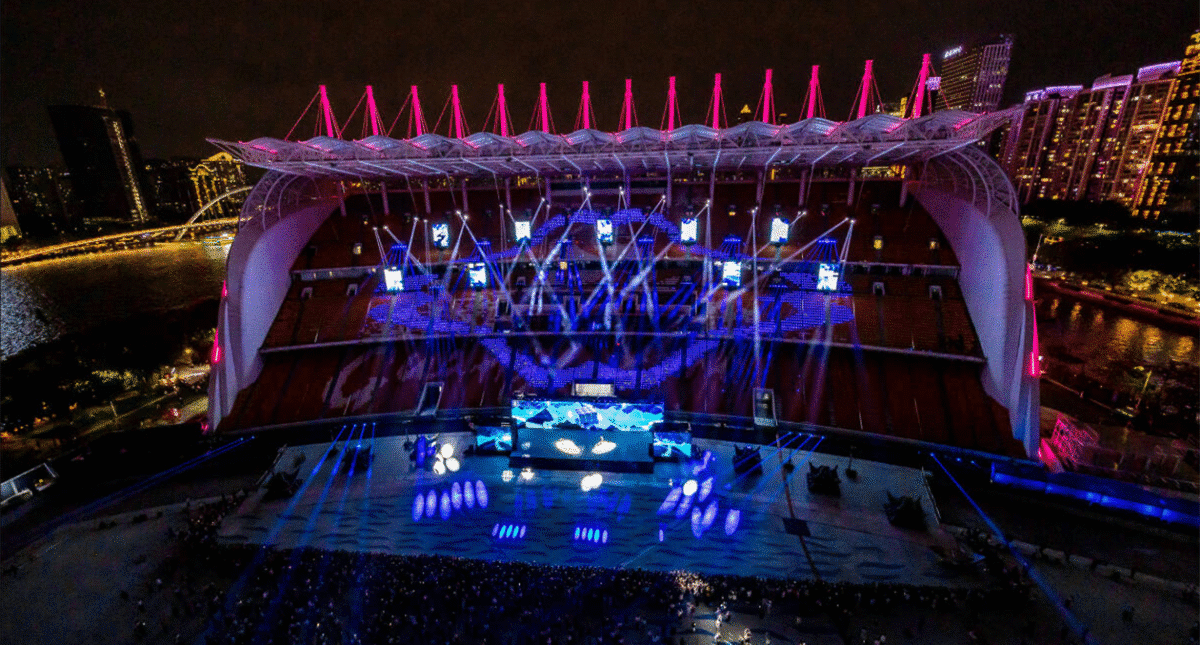
If the event depends on mapped visuals, logo reveals, text effects, or more detailed audience animation, then pixel control makes sense.
These effects usually require cleaner seat maps, locked visual assets, and less room for vague decisions later. They also require a technical team that can support a more demanding control path. In the right project, that extra control is worth the investment. This is usually the case when:
- The show design depends on audience mapping as a real visual feature.
- The event has clear seat logic and a structured deployment plan.
- The technical team has dedicated time for programming, testing, and execution.
- The budget supports a heavier hardware and control path.
When Standard RF Control Is the Smarter Choice
Many LED wristband events do not actually need that level of detail.
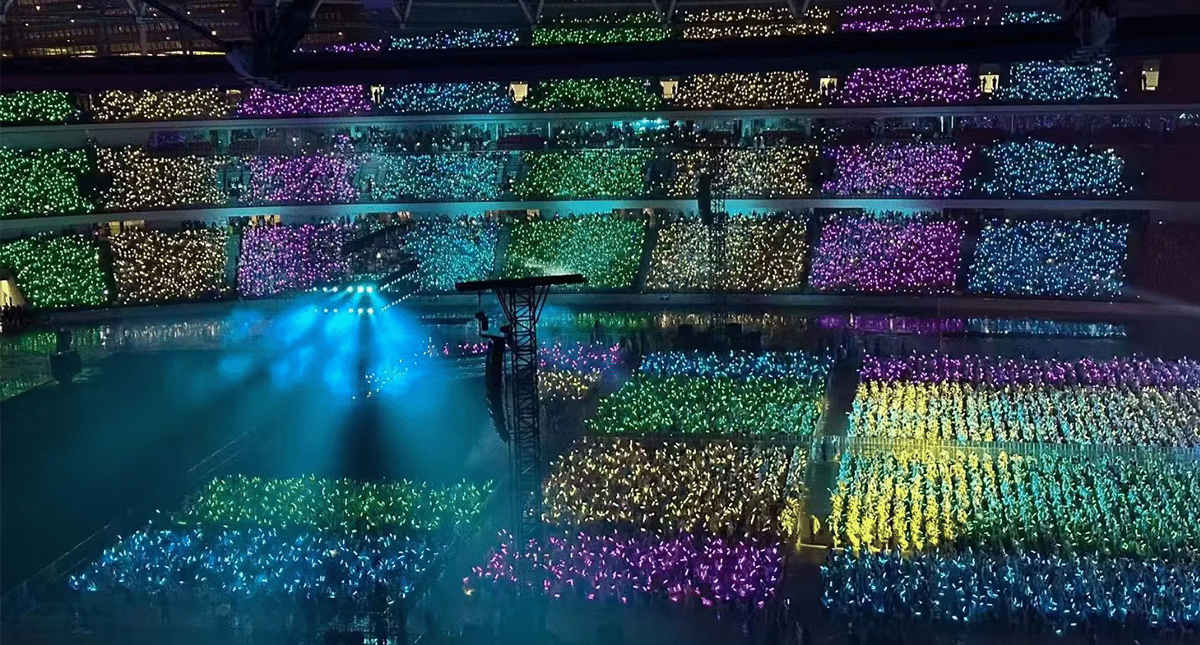
In large concerts, sports events, and brand activations, the real objective is often much simpler: synchronized color waves, fast flash cues, and a strong unified crowd reaction. In those projects, the wristbands are there to create impact, not to deliver detailed graphics seat by seat.
That is where standard RF control often becomes the smarter choice. And smarter does not mean lower-level. For many large-scale wristband shows, standard RF control is not the simpler compromise. It is the more reliable execution path. It is often easier to prepare, faster to deploy, and easier to manage on site, especially when the priority is stable audience lighting across a very large crowd.
Standard RF control is often the better fit when:
- The event prioritizes strong synchronized crowd effects over mapped audience graphics.
- The wristbands will be distributed in bulk at entry gates or loosely by section.
- The production schedule is tight and the team needs a cleaner execution path.
The Real Cost of Unnecessary Complexity
Complexity is not free. Once a project moves into pixel point control, the team usually takes on more pressure at the front end: more visual planning, more effect preparation, more testing, and less flexibility for late changes.
At a smaller scale, that may still feel manageable. At a scale of 10,000, 30,000, or 50,000 units, the same decision becomes much heavier. The question is no longer just what the system can do. It is whether the seat map, deployment method, timeline, and technica l team can all support it properly.
A project may look stronger on paper with pixel mapping, but if the local crew does not have enough time or structure to place the correct wristbands in the correct seats, the result becomes much harder to execute reliably.
Still deciding whether your project truly needs pixel point control? —Contact us to discuss the most suitable setup based on your event scale, creative objective, and deployment plan.